


 Written By
The gap in value between comic book categories is massive - we're talking about the difference between tens of thousands of dollars at auction and something that might not even cover a fast-food meal. It's a pretty wide range - it's a big part of why the type of ashcan that you have matters when you start thinking about price.
Ashcan comics have a very strange history - one rooted in trademark law, throwaway intentions and accidental survival. The originals were never meant to reach collectors or store shelves. Publishers printed just a handful of copies to meet a legal obligation, and then they moved on. No one was going out of their way to preserve these comics, and most of them didn't make it - which is a big part of what makes the surviving copies so rare.
That origin story is also a big part of why some ashcans can sell for very dramatic prices. A comic that was printed as a legal formality, passed around to a few hands in a publisher's office and nearly lost to time carries a very different weight than something that was mass-made and sold at a newsstand. Age, rarity and context all play into it (and the story behind an object can matter just as much as the object itself in terms of what it's actually worth) - it's true of collectibles. But it's especially true here - the whole point was never to make something worth keeping.
Let's talk about what comic book ashcans are and whether they're worth adding to your collection!
What a Comic Book Ashcan Really Is
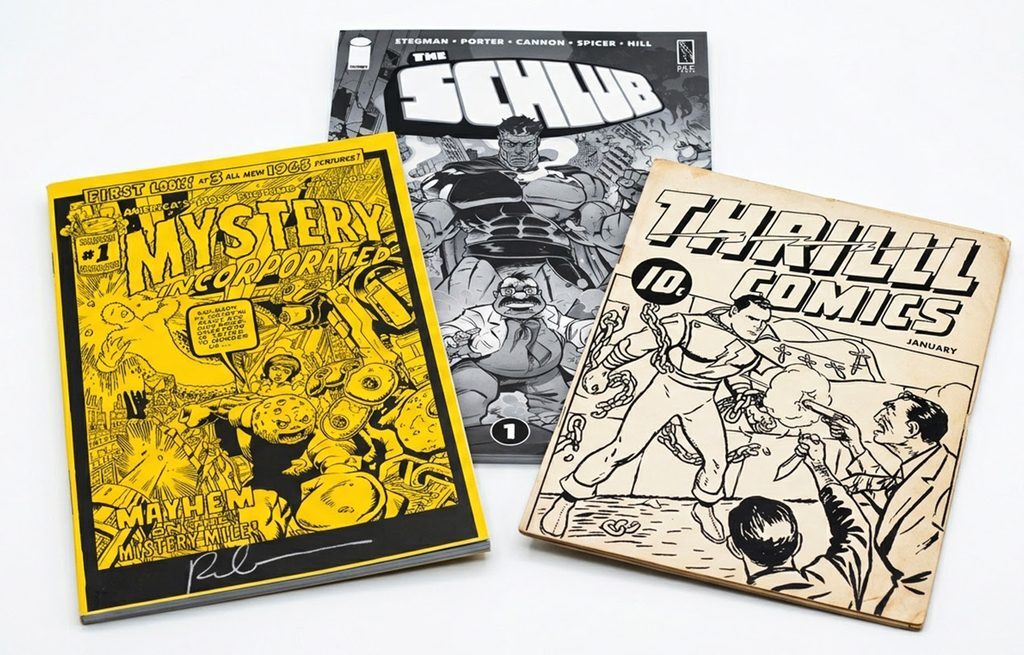
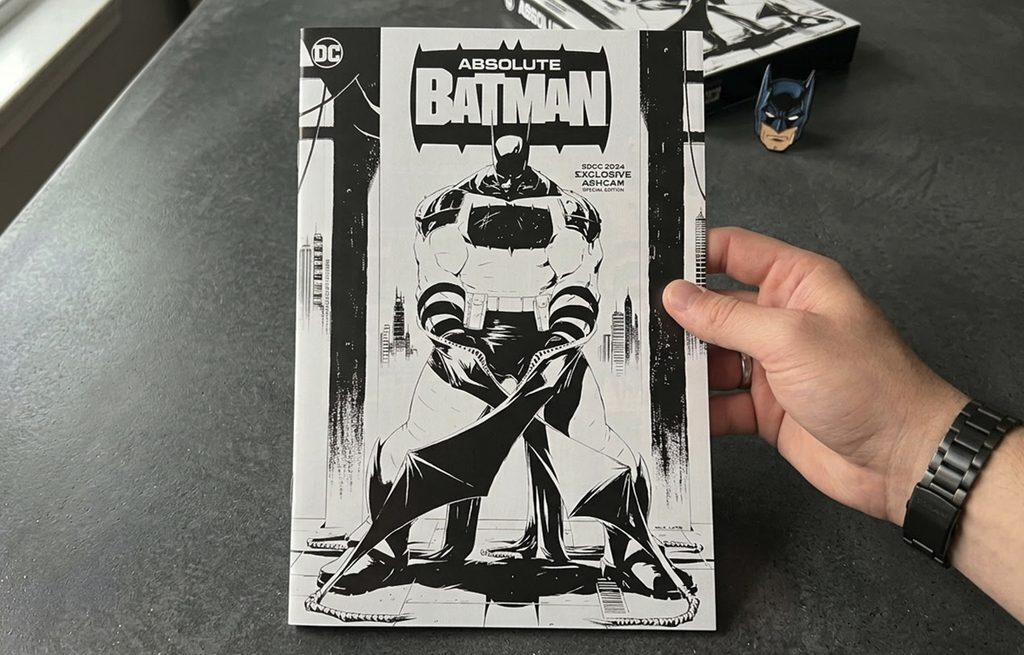
An ashcan is a small unofficial comic book that publishers put out in very limited numbers - and these were never made to look presentable. The whole idea was to get something printed fast and on the cheap, and you can tell the moment you hold one in your hands.
The pages are usually black and white, the paper stock is thin, and the print quality is rough at best. Plenty of ashcans even have covers with no connection to their interior content, which makes them feel more like a rough draft than a finished book. A store shelf was never the goal for these books.
The most striking feature is how raw and unpolished they look. No effort went into the presentation - it's not an oversight; it was a deliberate choice. A polished look was never even part of the plan. The actual goal wasn't about readers or sales or any of that.
The unusual reason behind their existence is actually what makes ashcans one of the more interesting oddities in comic book history. You pick one up and can't help but ask why any publisher would bother printing it at all. The answer goes back to some careful (and very deliberate) thinking on the part of publishers, and it's a curious little corner of the industry that you've probably never heard of - something I'll get into in just a bit.
An ashcan was just a document dressed to look like a comic book - it had a cover, full pages and enough physical weight to pass as a publication, something that you could hold in your hands and flip through. Even with that, it was never made with readers in mind.
Why Publishers Made These Throwaway Copies
Old comic books were mostly made with one goal in mind - get them in front of as many readers as possible and sell as many copies as they could. Ashcan comics had a very different goal altogether, and it had nothing to do with readers at all.
Ashcans existed for one reason and one reason only - to lock down the legal ownership of a title or character. Trademark law at the time leaned on evidence that a name was actually being used in commerce, and without a printed copy on record, a rival publisher could come along and stake a claim to that same name or character first.
What's interesting about these prints is that readers were never the goal - and neither was profit. The whole point was just to put something on paper and make it a part of the legal record, full stop. In fact, many ashcans weren't even properly finished - they often paired a new cover with recycled interior pages from another book, since the contents didn't really matter.
Because of that, print runs were quite small - we're talking as few as a handful of copies for some ashcans, which is practically nothing, and it's the very reason so few of them have survived to this day. Publishers had no real incentive to print more than the law needed, so most of them just didn't.
Early trademark and copyright law had quite a direct hand in shaping what actually ended up on the printed page. To get a sense of why some titles or characters look the way they do, the early publishing laws are worth a look - what those laws demanded from creators and why is genuinely interesting. The legal side of comics history is something I find quite underrated, and once you start to look into it, it gives context to why something like an ashcan would even be out there. It's a corner of comics history that rewards more attention than it gets.
How the "Ashcan" Name Came About
The name "ashcan" didn't come from nowhere - it came from actual garbage. Publishers would print these comics, submit them to secure legal protection on a title and then throw them away. And by throw them away, I mean literally into the ash bins that doubled as household trash cans at the time. The name came straight from those bins.
That throwaway mindset is a big part of what makes ashcans so interesting to collectors. No one held onto them because no one thought they were worth keeping. They were a legal formality, nothing more. Not a product that anyone had any intention of selling or distributing and not one worth preserving. There was no reason to store them with any care, display them or give them any extra treatment whatsoever.
Hardly anyone thought to preserve these ashcans at the time, which means very few actually made it through the decades in decent shape. A number of them were lost completely, others got damaged past the point of recognition and a fair number were just thrown out on the same day they rolled off the press. The rare ones that did survive did so mostly by accident - stuffed in a desk drawer, forgotten in a filing cabinet or passed along to a person who had no idea what they were holding.
It's a legitimately strange notion to sit with. These were objects that were made with no future value in mind - the whole point was to print them, file them and move on. And still, that total indifference (the fact that no one cared about them at all) is a big part of what makes them so rare and worth what they are. The less something was designed to survive, the more weight it seems to carry when it does. An ashcan that made it to the present day didn't get here because anyone tried to protect it - it survived in spite of everything that was working against it.
Golden Age Ashcans and Their Rarity
One of the most famous ashcan stories in comic book history comes straight from DC Comics during the Golden Age. Fawcett Publications had tried to register the title Flash Comics, and DC wasn't about to let that happen. A small and intentionally rough copy went to print very fast (not for readers, not for sale), just to legally hold the name first (purely a legal maneuver) - that's all it was ever meant to be.
Those early ashcans were printed in very small runs and never made it into the hands of the general public. Fast-forward a few decades, and that limited production history is a big part of why they're so extraordinarily rare. A verified Golden Age ashcan in decent condition can fetch tens of thousands of dollars at auction - and the prices show just how few of them made it through all these years.
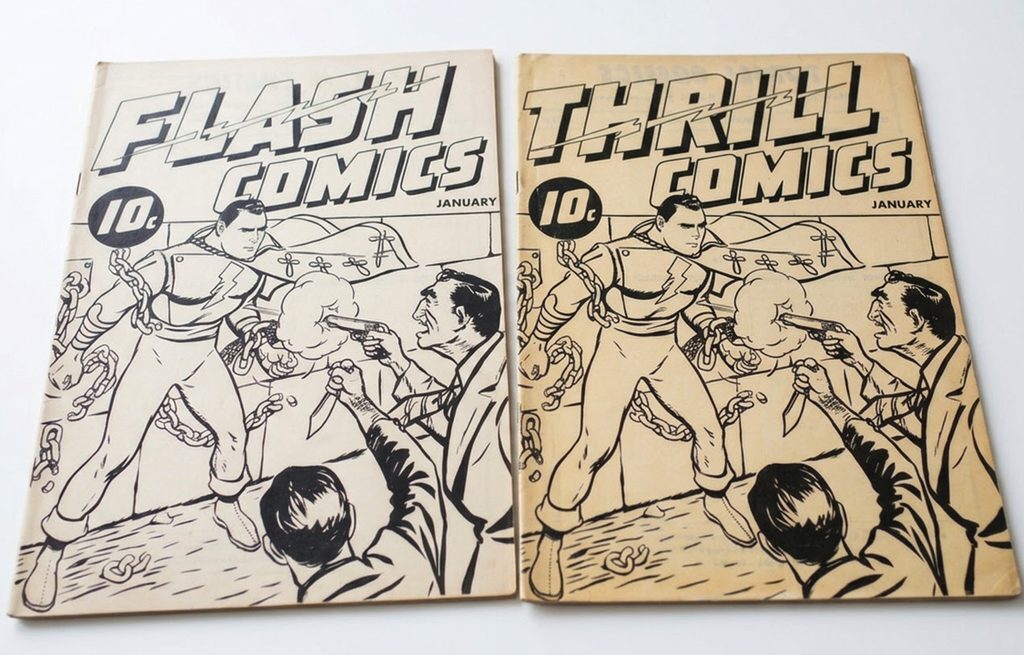
Collectors get excited about this era, and it's easy to see why. The fantasy of finding one tucked away in an old box at an estate sale is the sort of dream that holds in the hobby for life, and it does happen on rare occasions (these copies do surface from time to time) - but Golden Age ashcans almost never come up without a paper trail attached to them.
If you want to get a sense of what these are actually worth, the best place to start is with documented auction records. A raw asking price from a private seller doesn't tell you much on its own without that data behind it.
A Golden Age ashcan is a genuine part of publishing history - and the market prices it like one.
How 1990s Ashcans Changed Everything
The word "ashcan" picked up a whole new meaning once the 1990s comic book industry got hold of it. Publishers started to use it as a marketing term for small preview comics - the kind that you could find at shops and conventions, put out specifically to build excitement around those upcoming titles. These weren't rare proofs pulled from a print room somewhere. They were a deliberate product with a job, and publishers leaned into that identity pretty hard.
The print run size is the biggest difference between 1990s ashcans and their Golden Age counterparts - and it's a large one. Publishers cranked these out in massive quantities back then. That alone has had a big effect on their collector value. With thousands of copies still in the market, prices on these will stay pretty low - it's just basic supply and demand at work.
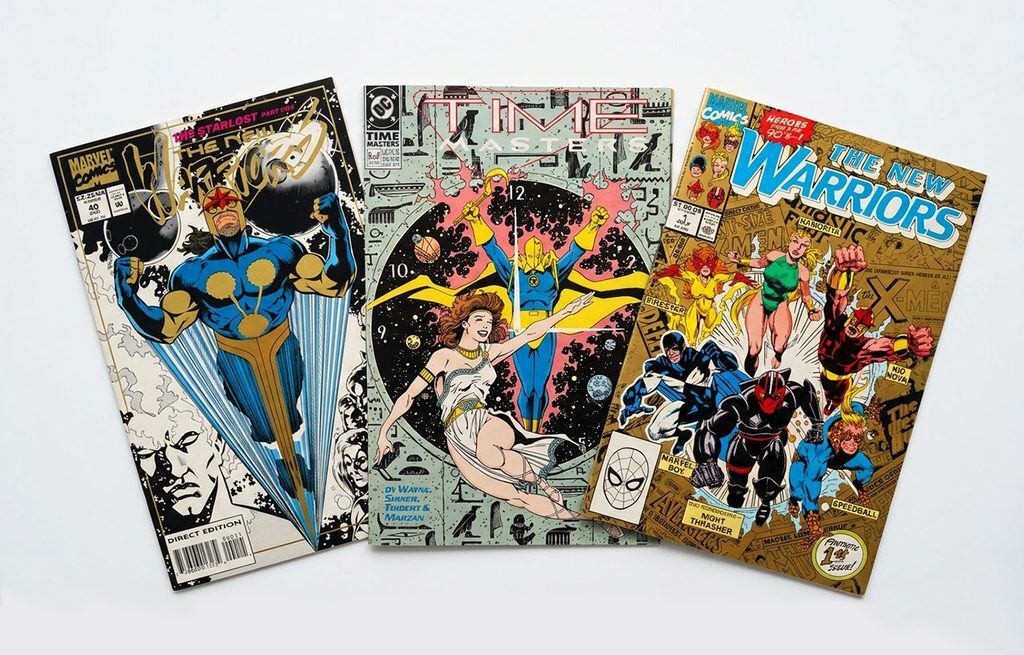
Pulling one of these from an estate sale box might make your pulse tick up a little. But a quick reality check is worth it. Most 1990s ashcans trade for just a few dollars - even in great condition. A handful of exceptions do turn up, of course, though they're quite rare.
This era connects directly to something called the comic speculation boom, which deserves its own full piece. During the early-to-mid 1990s, collectors bought up comics in bulk, with the full expectation that scarcity would push prices up eventually. Publishers didn't pull back on production - they ramped it up, which worked against everything those collectors had counted on. The ashcan format got pulled right into the middle of it, and the market ended up flooded with "collectibles" that were never actually rare enough to be worth anything. The demand was very real - no one disputes that. The supply just never went where collectors needed it to go.
What Makes an Ashcan Actually Valuable?
With so many format changes across the decades, it's helpful to try to know what actually sets a worthwhile ashcan apart from one that's nearly worthless.
A few factors work together to move the prices in either direction. Age plays a big part - older ashcans had much smaller print runs, and very few copies made it through the decades in any decent shape. Rarity comes into it as well, because scarcity drives demand, and both age and rarity can determine whether something sells. Even an ashcan with genuine historical weight behind it loses value fast when it's torn, faded or water-damaged - the physical state of the copy matters enormously.
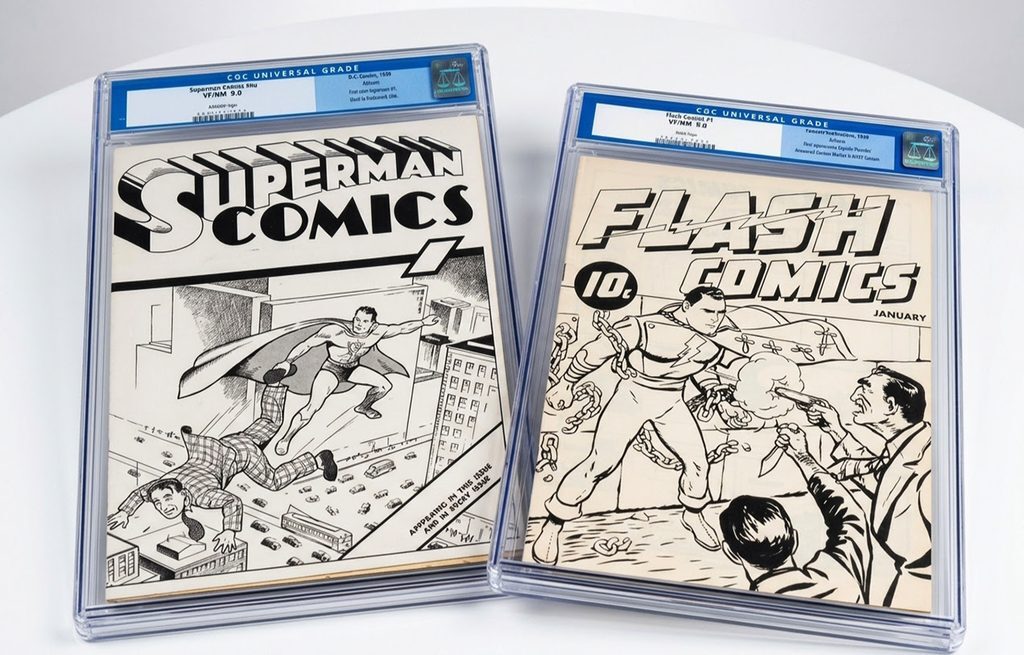
Authentication and provenance matter just as much as the physical copy itself does - and provenance is a term worth learning if you're new to this hobby. At its core, it's a record of who owned a copy and how it passed from one person to the next over time. Collectors will pay a premium for ashcans that have a paper trail, because that history is what backs up the item's legitimacy. Without that trail, an old-looking ashcan is a much harder sell - and a much harder item to stand behind with any confidence.
Quite a few new collectors miss this one. An ashcan that looks old and worn isn't automatically worth big money - wear and yellowing can come from all kinds of causes, and age by itself doesn't tell the full story. A grading service like CGC can authenticate and formally grade a copy, which gives buyers more confidence in what they're buying and gives sellers a much stronger case for their asking price. Before you spend actual money on anything, compare how graded copies are priced against ungraded ones in the same market.
It's one of the best habits to develop early on as a collector.
Learn About Your Comic Book's History
Ashcans are one of the corners of comic book history that reward curiosity. A little bit of background on where they came from, why they were made and how the meaning of the word has shifted over the decades goes a long way once you're actually holding a copy.
Assumptions are easy to make in either direction, and collectors make them all the time. Copies that turn out to be historically important get passed over constantly, and plenty of collectors hold onto 1990s promos in hopes of a payday that never comes. The answer usually lands somewhere in the middle. Before you write something off or put a big price tag on it, do your research and get it looked at by someone who knows.
The hunt itself is a massive part of what makes this hobby worth doing. A random dusty old box could be hiding something rare - and the work of tracing its history to figure out what it is and where it came from is a whole lot of fun. Even when the answer turns out to be a little anticlimactic, the path to get there is its own reward.
With that in mind, if you have something worth a closer look, we're here to help. At Quality Comix, we've spent over 25 years buying and selling vintage comics - and the depth of knowledge that comes along with that experience is hard to match. A collection to sell, an issue to add to your own collection or just a chance to see what's currently available - it's all right there on the site. The expertise doesn't cost anything, and the enthusiasm behind it is real.