


 Written By
A seller takes two damaged copies of the same comic (maybe one has a torn cover with a clean interior, and the other has a great cover but water damage throughout) and pieces together the best parts of each into one book that looks whole and presentable. The finished product can pass as a legitimate copy to anyone who doesn't know what to watch for, which is the whole problem. The money changes hands, the book makes its way home, and the truth only surfaces after a much harder look - or when a grading company flags it and encapsulates it with a restored (purple) label.
Originality is everything in this hobby. A book that's been married to another copy can lose anywhere from 50% to 90% of its value compared to a clean copy at auction - it's no small gap. A book that you spent actual money on could be worth just a fraction of that, sometimes next to nothing in the eyes of a hardcore collector. The more desirable the issue, the more those numbers hurt.
Thankfully, married comics are actually pretty detectable if you know what to look for. A little patience and the right knowledge go a long way, and most collectors can learn to catch these before a sale goes through. A few physical tells will give away a married book almost every time - mismatched staples, slight differences in color or paper tone between the cover and interior, and inconsistencies along the spine are the big ones. First printings and high-grade copies draw this sort of fraud more than others do, so those purchases always deserve extra attention. Past the physical signs themselves, a sense of where to buy from (and the right questions to ask a seller before any money changes hands) will pay off for as long as you're in this hobby.
Let's talk about what a married comic book is and how to stay away from one!
How a Married Comic Book Works
A married comic book is a single issue that has been assembled from two separate copies of the same comic. The seller picks the best-looking cover from one copy and pairs it with the cleaner interior pages from the other - the end result is one book that looks better than either original did on its own.
The finished product is a convincing book - but not a true original. It's been tampered with. That detail matters quite a bit.
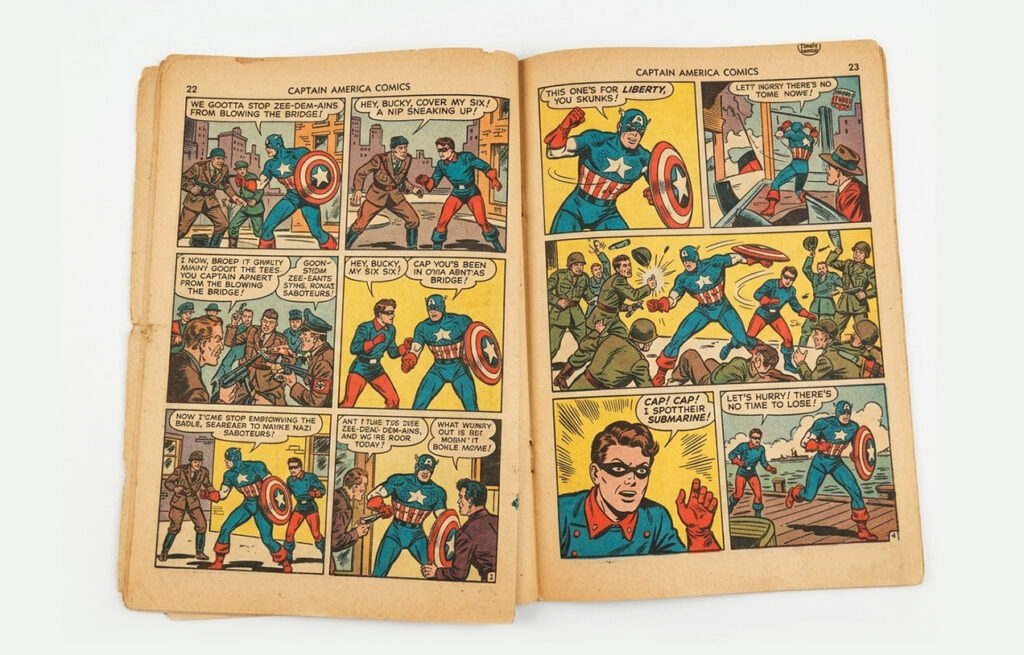
The reason sellers do it is pretty simple. A book with a great cover but damaged pages inside is worth way less than one that's in great shape all the way through. When a seller combines the best parts of two separate copies, the end result can come across as being in way better shape than either of the originals ever was on its own. It's a way to squeeze more money out of something that just doesn't warrant it.
The big problem with married comics is that they can be very hard to detect. The two halves usually come from books that were printed at the same time, on the same presses, with the same ink, which means there's often no visible seam, no color mismatch, nothing to give it away. Plenty of buyers have walked away with a married copy and never had any idea that what they were holding was actually two separate books at one point.
Within the hobby, married comics are usually treated as a form of alteration - and most dedicated collectors will tell you the same. A married copy won't grade or sell for anywhere near what a true original will. That gap in value alone is reason enough to make sure you know what you're looking at before any money changes hands.
Why a Married Comic Falls in Value
A married comic can lose anywhere from 50% to 90% of its value compared to an untouched copy. A gap like that is enormous - we're talking about the difference between a book worth hundreds of dollars and one that's barely worth anything at all.
Any alteration like this carries quite a stigma in the collector world. The quality of the work doesn't matter all that much (whether or not it was done expertly). Once a book has been married, it's no longer in its natural state. That fact alone changes everything about how it gets priced - it doesn't matter if the two halves match up almost perfectly. The second a grader or an experienced collector takes a close look, the book's history can become part of the record.
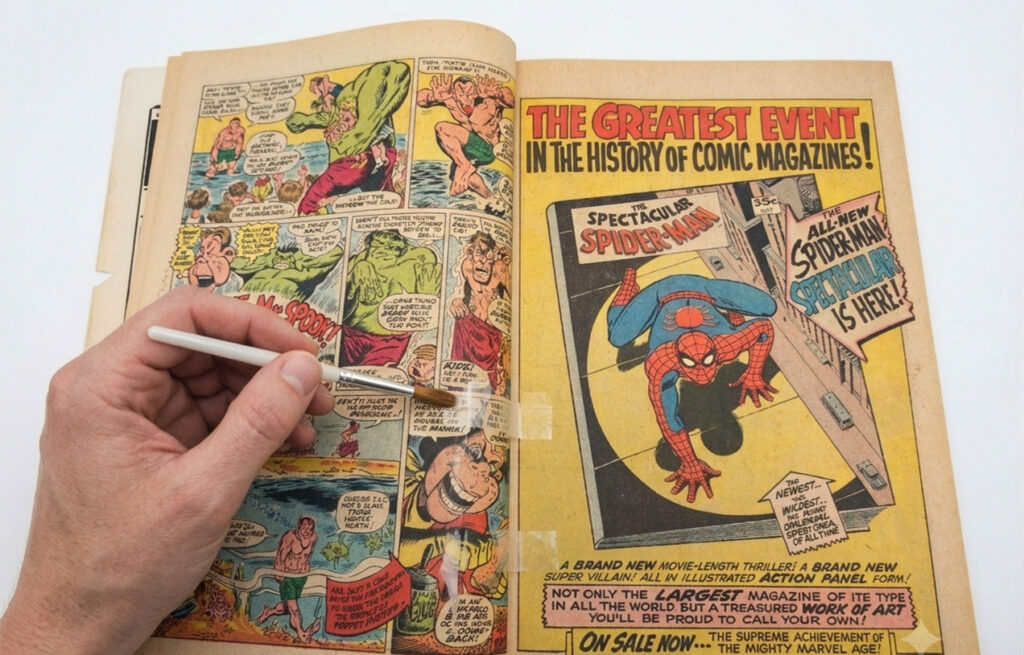
The hardest part is when a collector pays full price for a married book without realizing it. To hand over actual money for what you believed was an authentic copy (and then to find out it's worth a fraction of that), well, it's a hard lesson to learn. It's also the sort of experience that tends to make buyers a whole lot more careful the next time they go to buy one. They come out of that experience with a much stronger interest in third-party grading.
A book made from two separate copies will never be treated as a whole copy, no matter how polished the work looks. The market does not forgive that, and there's no way around it. I've watched some very beautiful books get passed over for this exact reason more times than can be counted, and it never gets any easier to see. The value just isn't there once that information is out.
Staple Holes and the Paper Toning
Staple holes are actually the most reliable place to start when a book feels a little off to you. On a real, untouched copy, the holes punched through the cover will line up cleanly with the holes that run through the interior pages. Even the slightest separation between them is a red flag - it tells you the cover and the interior pages were never put together at the same time.
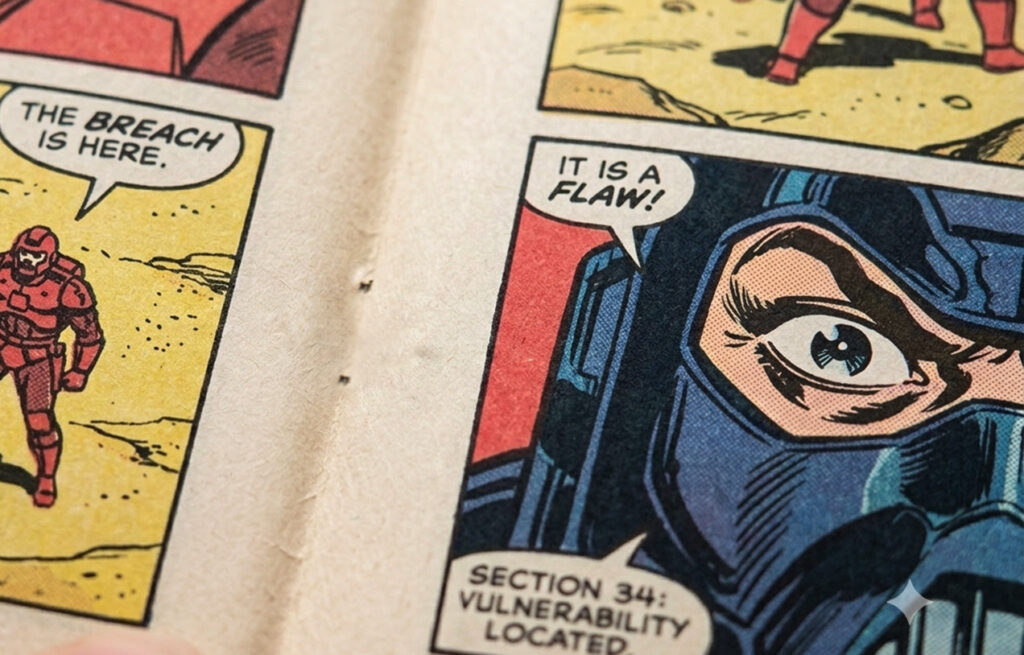
The paper aging deserves a close look. A genuine book's cover and interior pages have spent decades together, so the yellowing and brittleness should match up fairly well from front to back. A cover that looks much fresher (or quite a bit more worn) than the pages inside is worth a second look.
Take a close look at the staples, too. On an authentic book, the rust and oxidation on those staples will have aged right alongside the paper around them - they've all been in the same environment, after all. A staple that looks suspiciously fresh against heavily aged paper, or one that's pretty heavily corroded next to a crisp and well-preserved cover, is a pretty reliable sign that the pages and the cover didn't belong together.
The spine is worth a close look, too. Stress marks from years of reading and use build up slowly over time, and they usually run in the same direction across the entire book. The marks on the cover spine and the marks on the interior pages should look consistent - and when they don't, it's a pretty reliable sign that the two pieces came from different books before they were put together.
No equipment is needed for any of this, which is always a relief. A steady hand, decent lighting and a little patience are all you need - and most married books have enough clues built right into them that you won't need much else.
How Graders Catch a Married Comic Book
Professional grading is probably the most reliable way to catch a married comic book. CGC and CBCS put every submission through a close physical review, and their trained graders have a very sharp eye for this - especially when pages or covers have been swapped in from another copy.
When a grader finds evidence of marriage, the book gets labeled as restored and comes back with a purple label instead of the standard blue grade label. A purple label doesn't ruin the book or take away all its value. But it does permanently tell every future buyer what they're holding - it's a notation that isn't going anywhere or up for debate.
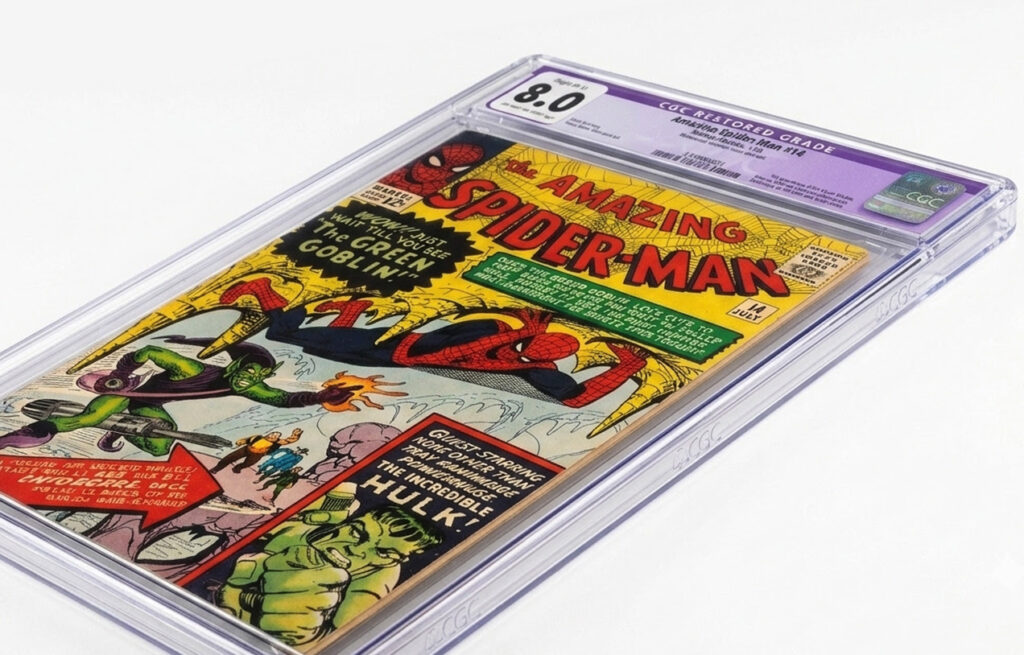
This matters quite a bit. Any seller can word a description any way they'd like - flattering language is free. But a graded purple label is a physical third-party record attached directly to the case. You can't reword it, and there's no way to talk around what it says.
A married comic gets flagged as an alteration in the grading process, and rightly so - it's the parts from two separate books combined into a single presentable copy, which puts it outside its original state. What many collectors don't know is that graders won't give any credit for a clean marriage over a rough one. The quality of the work has no bearing on the outcome - the minute two books become one, the restoration label follows automatically.
For anyone who wants some reassurance on a buy, a graded copy takes most of the uncertainty out of it. The grade label is right there on the case - you can read what you're looking at and base your call on the documented proof. When you're spending money on a vintage book, that level of transparency goes a long way.
How to Buy a Book You Can Trust
That background knowledge gives you a pretty strong foundation to work from - and a few habits that help you put it to use when it's actually time to shop.
For any book that's worth money, a graded copy is well worth the added expense. A third party has already gone through it, verified the condition and sealed it up - the outside validation carries genuine value on its own.
With raw books, always try to see the copy in person before any money changes hands. If that's not an option, ask the seller for plenty of photos - and don't be shy about it. Any seller with a legitimate copy will be more than happy to oblige.
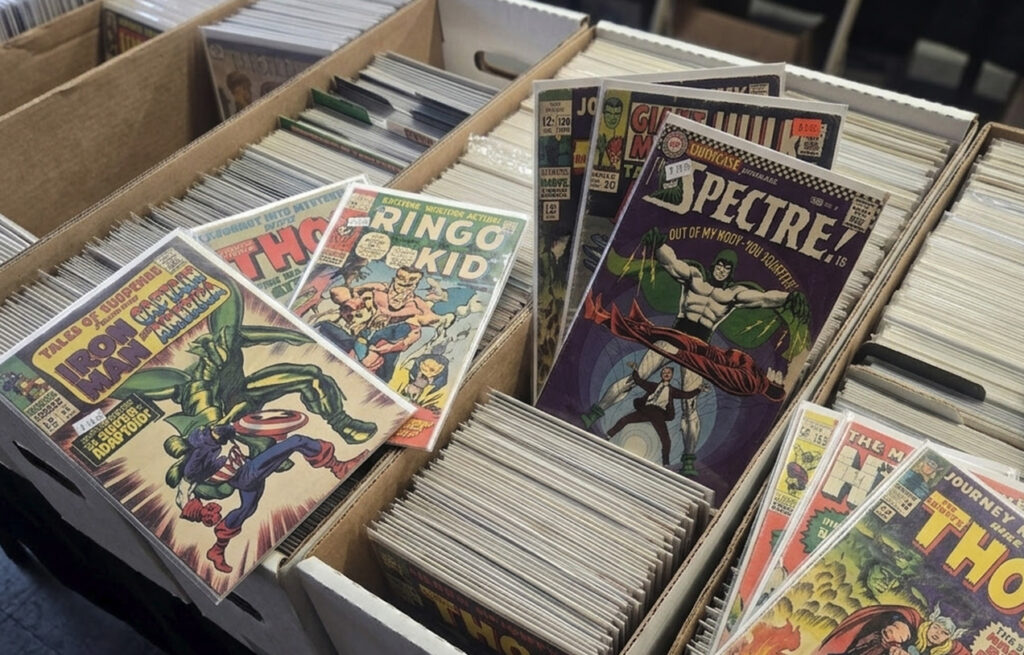
A price that seems a bit too low to be real is worth slowing down for - and deserves a healthy dose of skepticism. A high-grade book at an unusually low price is possible. But genuine deals like that are rare. When something feels a little off about a listing, slow down and take your time with it.
A seller with a decent return policy is well worth looking for if you haven't bought from a market like this before. The option to send a book back when something isn't right is a genuine safety net, and the protection more than pays for itself.
The physical tells we covered are worth keeping in the back of your mind for when you need them. None of it's meant to make you paranoid about every transaction - it's just about having a little more knowledge than the average buyer. Most deals go just fine, and the ones that don't are a whole lot easier to manage if you already know what to look for.
Old Books Are Where the Real Danger Hides
Golden Age and Silver Age books are where you'll see this happen the most. They're older, much harder to find and far more expensive than anything published more recently - that combination makes them a much bigger target for this type of alteration.
Age matters quite a bit here, and the reason is worth a quick explanation. Comics from decades ago survived in wildly unpredictable ways - one copy may have a near-perfect cover with a ruined interior, and another may have the exact opposite going on. That inconsistency is a temptation for some sellers, who will strip the pieces from two ruined copies and combine them into one "married" book worth far more than either one was on its own.
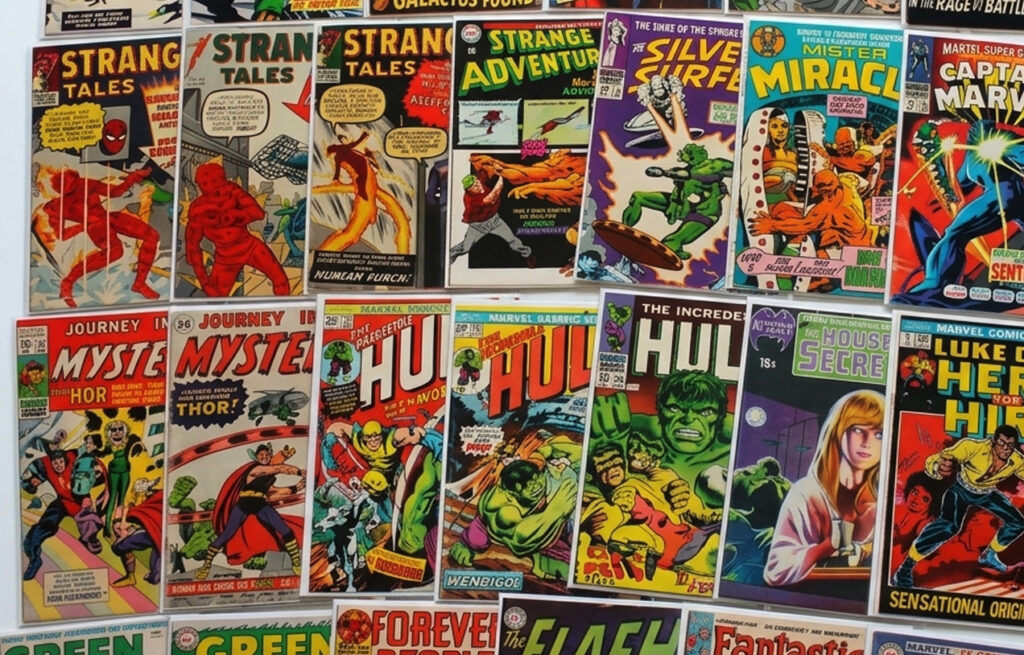
A dream book from the late 1930s through the 1960s is a real prize, and the pull of wanting one of these is very understandable. These are the books that die-hard collectors spend years trying to track down, and after that effort, a tampered copy is legitimately painful to come home with. The disappointment is real. That alone is reason enough to take your time and do your homework before you commit.
With any expensive vintage book, the idea is always to do your research before any money changes hands. Titles from these eras have a well-documented history of alteration and restoration within the collector community, and a fair amount of that information is freely available online. A quick search on the right forums can tell you which titles are more likely to have these kinds of problems and, just as important, what to watch for when you're actually looking at one. From what I've seen, the more expensive and desirable the book, the more documented its tampering history tends to be.
The older and pricier the book, the more time and attention it deserves before you hand over your money.
Ask the Right Questions Before a Deal
The history of the book is one of the best places to start. Ask the seller where they got it and how long it's been in their possession. A seller with nothing to hide will walk you right through it - and if the answer feels vague or evasive, that alone tells you quite a bit about what you're working with.
It's also worth asking whether the book was ever sent to a grading company. A book that was previously graded but is now being sold raw - that's worth a straight answer before any money changes hands.
From there, take a hard look at the price. If a number feels a little off to you, it's fine to ask how the seller arrived at it - no accusation implied, just due diligence on your part. All you're doing is trying to get a clearer picture of what your money is actually buying. Any seller who knows their inventory well will be more than happy to talk you through it.
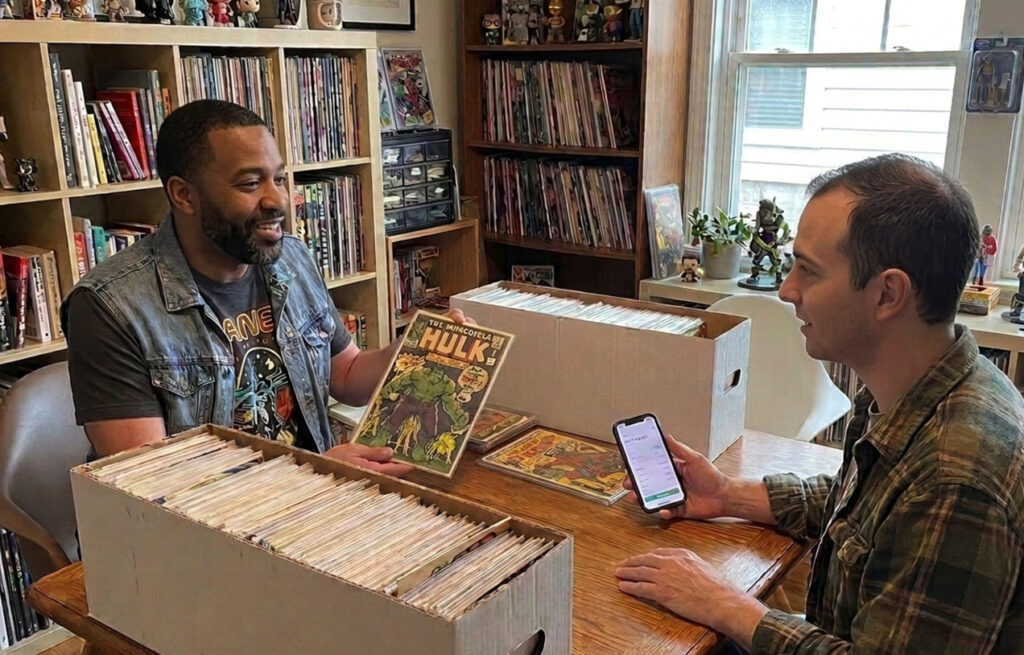
Before you follow through on a deal, ask about the return policy. A seller who stands behind what they sell won't hesitate to tell you what to expect if something turns out to be wrong - the answer alone will tell you quite a bit. A book with no return window at all is worth pausing on before you hand over your money.
Pointed questions like these can seem a little uncomfortable if you're still fairly new to the hobby. A decent seller won't take any offense to them, though - these are all fair questions to ask. The more you go through them, the more natural it gets, and you'll be happy you made a habit of it every time a new piece catches your eye.
A Sharp Eye Goes a Long Way
A great collection is one of the most fun projects you can build as a comic fan. That excitement is worth protecting. The habits that we went over (staple alignment, paper toning, graded copies and the right questions to ask) are not that hard to learn. A little attention and some practice are all that it takes, and the more books you get your hands on, the faster your eye for detail will sharpen. Most collectors who have been at this for a while can spot a married book almost on instinct, and with a bit of practice, you'll get there.
Any seller worth buying from will have no problem with your questions - the right one will actually welcome them. Graded books have documentation that you can count on. For raw copies, physical signs like staple holes and paper toning tell you quite a bit if you take a second to look at them. None of this takes much expertise - just patience and a willingness to slow down before any buy.
For over 25 years, Quality Comix has been helping collectors buy vintage comics with confidence. Every book that comes through our doors gets the attention it deserves, and our grading standards are something we stand behind. Whether a collector wants to add a Golden Age issue to their collection or is finally ready to sell books that they've been holding onto for years, we make either side of that process as smooth as it can be - and as transparent as it gets. Our new arrivals page is worth a look if you want to see what just came in, and our Epic Points rewards program is a great way to get more out of every order.
The hobby is a long game, and we're happy to be a part of yours.
Thanks for the great info on married comics. I have been involved with comics for years and had never heard the term, but was aware of the phenomenon. I typically don't buy high end books over the internet or books that are dismantled, as I would think reassembling pieces of a married book would be very hard to do and not be obvious. I hate to think of the books I have owned and moved on from that I should have held on to. Anyway thanks for the great info and incite. (BTW as an older guy with back issues one piece of advice for new collectors is if they are storing their books in comic boxes, I always recommend short boxes as we age the long boxes are hard on the back especially with the awkward length between the handles. If you are young and fit two short boxes stacked allows you to move a long box worth. Yeah, I know I used to move 2 long boxes or on occasion 3 at a time, but that is long ago with a much healthier back. As you age the short boxes may take a few more trips, but save the back in the long run. Also, if you have younger kids involved short boxes are easier and safer for them (and the comics) to move.
You know, it wouldn't bother me to get a married or restored Golden age comic if the price reflected it and it was flagged as such.
GA books in good shape are so hard to find without paying insane prices - which I can't afford anyway - that this would be a great option in my mind.