


 Written By

All the decades spent digging through convention bins, online auctions and back-issue boxes at your local shop can disappear in a single afternoon. A burst pipe, a house fire, or a break-in will wipe out a beat-up reading copy just as fast as it wipes out a CGC 9.8 high-value issue worth a few thousand dollars - it makes no distinction. But plenty of collectors stick with whatever homeowner's or renter's policy came bundled with their lease or mortgage and never look into what that policy covers for their collectibles.
The problem with standard policies is that comic collections get lumped in with general personal property, which comes with pretty tight sub-limits. Most of them will cap collectible payouts at $1,500 or less - and a single graded Silver Age top book can blow right past that number all on its own. The unfortunate part is that most collectors don't encounter this gap until after they've filed a claim and received a check that barely covers a fraction of what they actually lost. At that point, there's not much that you can do about it.
The right coverage takes a bit more effort than picking up a policy and setting it aside. At a minimum, you'll want the right policy type for your collection's size, an accurate valuation of what you own, a documented inventory with photos or receipts, and a standard review process for when the market changes. Prices in this hobby just don't sit still - the comic market alone hit $205 million in auction sales in 2024, and rare comics have been going up in value at roughly 10% to 15% per year.
A policy that you put in place two or three years ago could already leave a gap between what your collection is worth now and what you'd get back on a claim. A gap like that can leave you underinsured when you need the coverage most.
Let's talk about how to protect your investment!
Why Your Home Policy Falls Short for Comics
Most homeowner's and renter's insurance policies do include some coverage for personal belongings, which seems like good news until you read the fine print. The specifics buried in those policies are what make it pretty frustrating for collectors. Most of them put a hard dollar cap on collectibles - usually anywhere from $1,000 to $2,500 total. Not per item or per category - but a combined limit across your entire collection.
A long box full of Silver Age books could well represent thousands of dollars in value - and if a fire, flood, or break-in ever hits, you might only walk away with a $1,500 check to cover it all. That gap is brutal to find out about after the fact, and it's one of the more common situations that I run into with collectors.

Standard insurance was never quite built with big collections in mind (that's where the whole problem starts) - it was designed to cover household items like your TV, your furniture, or your laptop. A graded first appearance issue just doesn't fit into that equation. A policy with a $1,500 blanket cap on collectibles won't come anywhere close to making you whole. If you've ever wondered which comics have the lowest production numbers, those are exactly the kinds of books a standard policy is least equipped to cover.
Fortunately, there's a fix for this. Dedicated collectors insurance was built to fill in just the gaps that standard policies leave open - higher coverage limits, accurate valuation methods, and protections that actually line up with what your books are worth. Before we get into what those policies cover and how they work, it's worth a quick look at your existing coverage first. The numbers just aren't going to add up the way they should for most collectors. This is especially true if you're holding onto Bronze Age comics or other issues that have quietly climbed in value over the years.
What Your Collectibles Policy Can Cover
Collectibles insurance is a niche product built with collectors in mind. That focus comes through pretty directly - look at what it covers. A decent policy will protect your books from theft, fire, and water damage - the core protections. The more interesting part tends to be the coverage that goes a bit past that.
Whether you're hauling long boxes to a convention or shipping a book off to a grading service, that's actual money passing through unpredictable hands. Transit coverage tends to be one of the biggest reasons collectors choose a dedicated collectibles policy over a standard one - and understandably so. Damage in transit is one of the most common ways a collection loses value fast, and your homeowner's policy likely won't cover any of it.
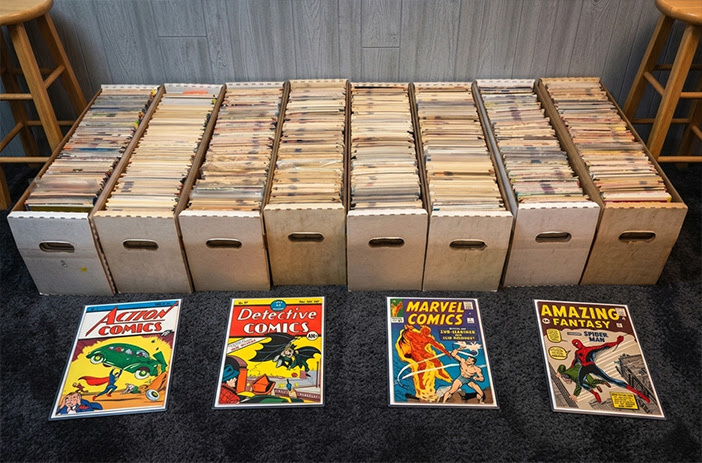
Accidental damage is another area where a dedicated policy earns its keep. A dropped slab, a storage shelf that suddenly gives way, a burst pipe in the back room - these can all qualify for a claim under the right coverage. These are the exact scenarios that keep collectors up at night, and a dedicated policy is built specifically to cover every one of them.
Not every policy packages these protections together by default. Transit coverage is more likely to appear as an optional add-on than something that's automatically built in. Before you sign anything, go through the policy line by line to confirm what's included and what isn't. It's also worth knowing the safest shipping methods for comic books so you're not relying on insurance alone to protect your collection.
How Your Insurer Decides What to Pay You
One of the first decisions you'll run into when you're putting together a comic book insurance policy is how your insurer calculates your payout if something goes wrong.
You'll find two different methods for this, and you'll have to know which one ends up in your policy - it matters how much money you walk away with after a claim.
With agreed value coverage, you and your insurer settle on a fixed dollar amount for each book before the policy even goes into effect. If a book is insured for $5,000 and gets destroyed in a fire, you receive $5,000 - no haggling, no deductions, and the full amount is yours.
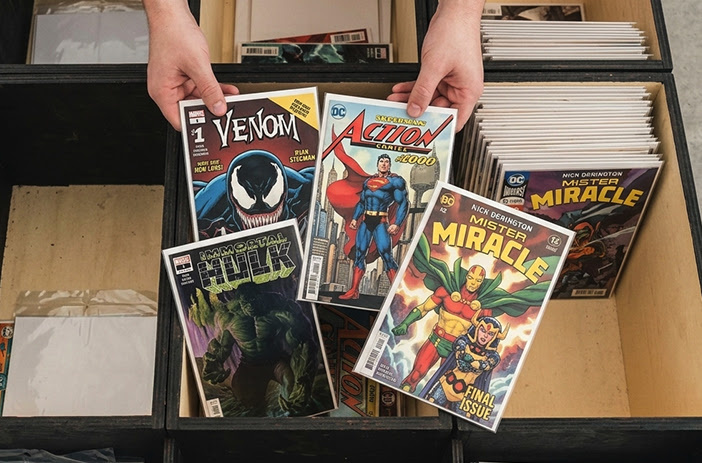
With actual cash value coverage, the insurer gets to account for depreciation and lower your payout when a claim comes in. For something like a used car or an old laptop, that's a pretty fair way to manage it - those items do lose value as they age. Comics are a very different situation, though. Plenty of books gain value over the years instead of losing it.
That gap is a big part of why agreed value tends to be the better option for a comic book collection. The value gets locked first (the two of you agree on the number before anything happens), so the figure can't be challenged or renegotiated when you go to file a claim. Your book's worth is already established and on record, so it won't get pulled into some arbitrary debate at the worst possible time.
Pre-policy valuations do take a little work on your end - and in my experience, that's the step most collectors like to forget. The effort is real, no question about it. But it's also what makes your coverage actually worth something when a claim comes in. If you're not sure where to start, getting a large collection appraised is often the most straightforward path forward.
Why a Pro Grade Makes Your Claim Easier
Professional grading is one of the best moves that you can make to protect a comic's insured value. Services like CGC and CBCS give each book its own certification number and seal it in a protective case that makes any tampering obvious and comes with a well-documented condition grade.
Agreed value policies are where this tends to matter most. With that type of coverage, you and your insurer agree on a fixed payout before anything ever goes wrong - and a third-party grade is what gives that number a defensible foundation. Without one, the whole conversation turns into a back-and-forth with an adjuster who more than likely has a very different opinion about what your book is actually worth.
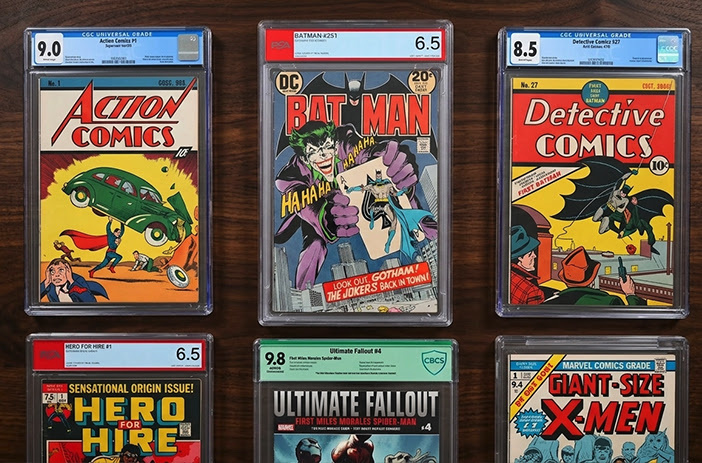
If a graded book ever gets stolen, that certification number can be searched across the big databases and reported to the resale sites pretty quickly. A book with a traceable identity is a much harder sell for a would-be thief than one with no paper trail at all.
That said, a full collection grade takes plenty of time and money, so it's worth picking which books deserve the attention. The ones that deserve the most attention are the books with the most value - especially the ones that would be hard to replace at the latest market price. Those are the ones where the grading fees make the most financial sense from a pure protection standpoint. A reading copy of some mid-tier 1990s issue probably doesn't need a slab. A first appearance or a high-grade key issue is a different story - I've seen plenty of collectors pass on the grade for one of those and later come to regret it.
How to Document Your Comic Book Collection
Once your books come back graded, the next step is to build a strong paper trail around each one. That means high-resolution photos, any receipts that you still have, and a written record of what each book is actually worth at the latest market value. For pricing data, GoCollect and GPAnalysis are pretty reliable - they take most of the guessing out of it, and if you're not already familiar with them, they're worth bookmarking.
A well-organized spreadsheet is what ties this together - every title, its grade, its estimated value, and where you picked it up, in one place that's easy to update and hand over to an insurer when the time comes. Most collectors also keep a second copy backed up in cloud storage, and it's well worth the effort if your collection has any actual value behind it. If you're not sure where to start, building a proper inventory is easier than it sounds.

The paper trail is probably the least fun part of this hobby - and also the part that most collectors put off the longest. The problem is that without a paper trail, it's hard to prove what you had when it comes time to file a claim. Insurers aren't going to take your word for it, and they're not obligated to.
For most collectors, if your entire collection disappeared tomorrow, you probably couldn't sit down and list every book that you owned along with what each one is worth - that's where records come in. Taking good photos of your comics is one of the simplest ways to strengthen that documentation. The great news is that once your system is in place, it just takes a few minutes to stay up to date each time you add something new.
What Happens When You File a Claim
Most collectors don't have a game plan ready for when they need to file a claim on their comic book collection. A rough idea of how the whole process works ahead of time can take the stress out of it when that day arrives.
The first step after a loss or damage is to contact your insurer. Most policies have a set window to file, and if too much time passes, the insurer may have grounds to push back on your claim.

Your insurer will ask for proof of what you owned and what it was worth at the time of the loss. Well-organized records can help at this stage - the more detailed your records are, the smoother this whole process tends to go. From there, an adjuster will review everything against the reported loss and work out a settlement figure.
Adjusters are going to work with whatever valuation records you hand them - not with what the market looks like. If your most recent appraisals are a few years old, the payout that you receive might fall well short of what your collection is actually worth. Up-to-date valuations are legitimately the best protection that you have in a situation like this. That should be a priority.
One of the more painful mistakes I see is when collectors don't find out their collection has outgrown its coverage limit until a claim is already in motion. At that point, your options get pretty narrow, and the difference between what you lost and the insurer's final payout can be pretty wide.
Keep Your Policy Up to Date
Comic book values are always in motion. A single casting announcement or a new movie trailer can push a book's price way up in a matter of days - sometimes even hours. The market has shown us this pattern time and again, and it tends to hit the hardest with first appearances of characters who suddenly land a part in a big film or streaming series. If you want to stay ahead of shifts like these, it helps to keep an eye on which comics could see a price increase.
The sneaky part is that your insurance coverage can quietly fall behind what your collection is actually worth. A book that was listed at $500 two years ago could be worth a few thousand dollars today. If your policy still has that old number on it, you're only covered for a fraction of what you'd lose. That gap won't feel like a problem - right up until it suddenly is one.

A yearly policy review is probably the best way to stay on top of this. Pull up some recent sales data, check what the graded copies are going for on the big auction sites, and then hold those numbers up against what your policy currently covers. When the two don't line up, it's time to get on the phone with your insurer and get everything updated.
It doesn't need to be a big production. A yearly reminder (maybe timed around tax season or the start of a new year) and a quick check-in are all it takes. A short call with your insurance provider and a couple of updated appraisals can make quite a difference in what you get when it counts.
Protect Your Growing Collection
One last point to add here - it's not a one-time job, and it's probably never going to be. Collections grow, values move around, and the market tends to drift forward quietly as your coverage just stays in place. A policy review done every year or two matters just as much as having it right from the start. What you're covered for needs to actually line up with what you own - not what you had on the shelf two or three years back.
Plenty can change in that time. A single big issue can double in value, and a run that you picked up for next to nothing might now be worth quite a bit more. It's easy to let too much time pass between policy reviews - and if a claim ever comes up, that difference in coverage can cost you.
Whether you've spent years chasing a big issue or you have a box of books that you're ready to part with, our team at Quality Comix knows this hobby inside and out.
Check out our new arrivals to see what's just come in. If you're curious about what your collection might be worth, our selling process is a pretty easy one to move through.
We also put together a free e-book for collectors who want to go a little deeper into the hobby, and our Epic Points rewards program has something extra with every order. Whatever brought you here, we're happy that you found us!