


 Written By

Rare comics have always pulled in actual money, and Batman titles sit in their own category altogether. Even longtime collectors will be amazed at some of these sale prices. For anyone who wants to hunt down the actual figures or put together a ranked list of the most sought-after issues, the search gets messy in a hurry - auction records are spread across dozens of different houses, condition grades can swing wildly from one sale to the next and restored copies pass themselves off as untouched originals.
The difference between a good buy and an expensive mistake usually traces back to research - or a lack of it. Condition, provenance and character importance all affect prices, and two books that look almost identical can be worth ten times the difference at auction. Batman's rogues gallery alone (the Joker, Catwoman, Ra's al Ghul) holds some of the most chased first appearances in comics, and the level of demand has never faded.
What follows is a rundown of verified sale prices, grade-by-grade comparisons and the market activity that pushed Golden Age Batman books into record territory between 2020 and 2022. A ten-cent comic from 1939 eventually became a multimillion-dollar collectible, and the numbers behind that are worth a close look - whether your goal is to buy, sell or just get some sense of how far these books have come.
Before we get into all this, the data is what matters here - not the hype. Collectors pay way too much because they're working off asking prices instead of actual sale records, or they misjudge a grade, and it costs them. Restored copies complicate matters even more, because a restored book can look flawless from the outside and the price difference between one of them and a genuine unrestored original is massive. Hard numbers are the only reliable place to start - not estimates or hearsay.
Let's talk about the most expensive Batman comics ever sold and their wild stories!
Batman #1 Sold for a Record Price
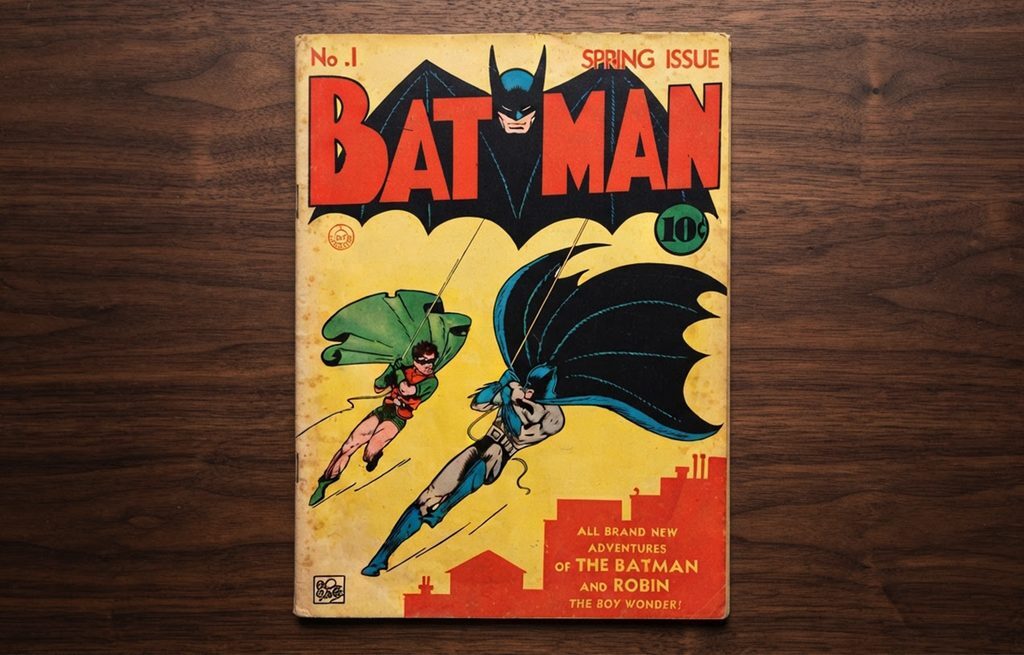
A CGC 9.4 copy of Batman #1 went for $2.22 million at Heritage Auctions - a number that puts it right alongside fine art and real estate.
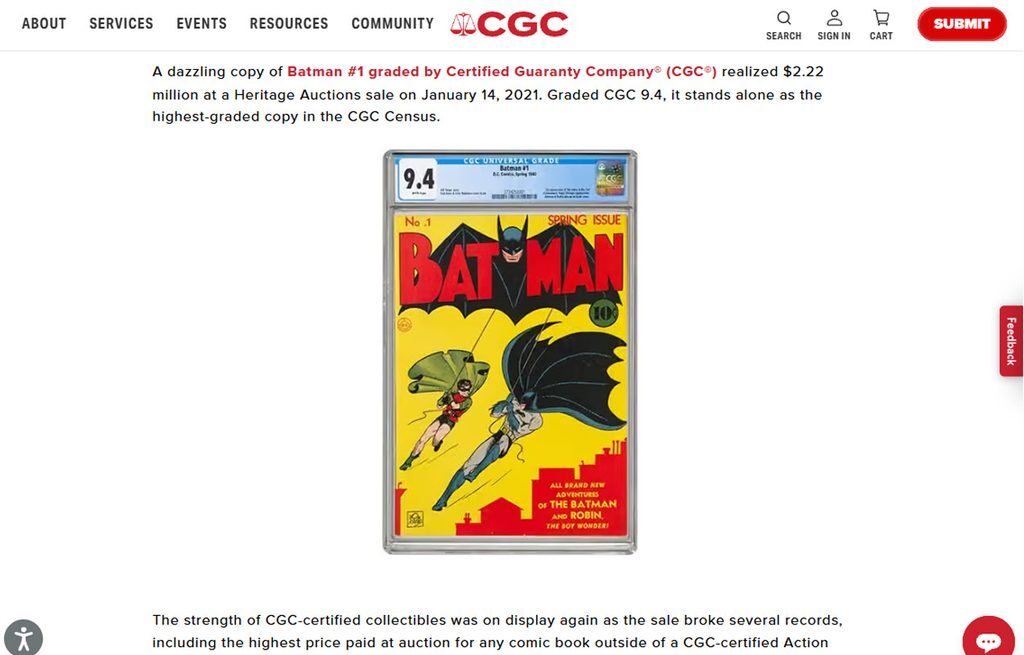
That grade actually matters. CGC is an independent third-party grading service that scores comics on a scale of 0.5 to 10 - and a 9.4 on an 85-year-old book is genuinely rare. Most copies from that era got read, folded, tossed in a garage or just lost to time altogether. The fact that a copy survived in near-mint condition after more than eight decades is a big part of why collectors paid attention and why the price went where it did.
A big part of what drives the price so high is what's inside the issue. Batman #1 contains the first appearances of the Joker and Catwoman - two characters who went on to become main figures in the Batman universe. First appearances carry weight with collectors on their own, and to have two of them in the same issue is about as rare as it gets. The high grade on top of that means that you have a book that covers almost everything a collector would want.
To put the $2.22 million in perspective, Heritage Auctions had sold earlier copies of this same issue for far less - and the gap alone is a fair measure of how much the market for high-grade Golden Age books has grown over the past two decades. The 2021 result set a record at the time, and it reflected a much wider trend in collector demand that had been pushing prices across the entire hobby to levels the market had never seen before.
The Comic That Gave the World Batman
If Batman #1 is the record-breaker, Detective Comics #27 is the one that actually started it all. Published in 1939, it's the book where Batman made his first appearance ever - and to this day, collectors treat it like no other comic in existence.
The numbers do back that up. A CGC-graded 8.0 copy went for $1.5 million at auction - a landmark for the hobby and a pretty telling sign of just how much a single issue can be worth.
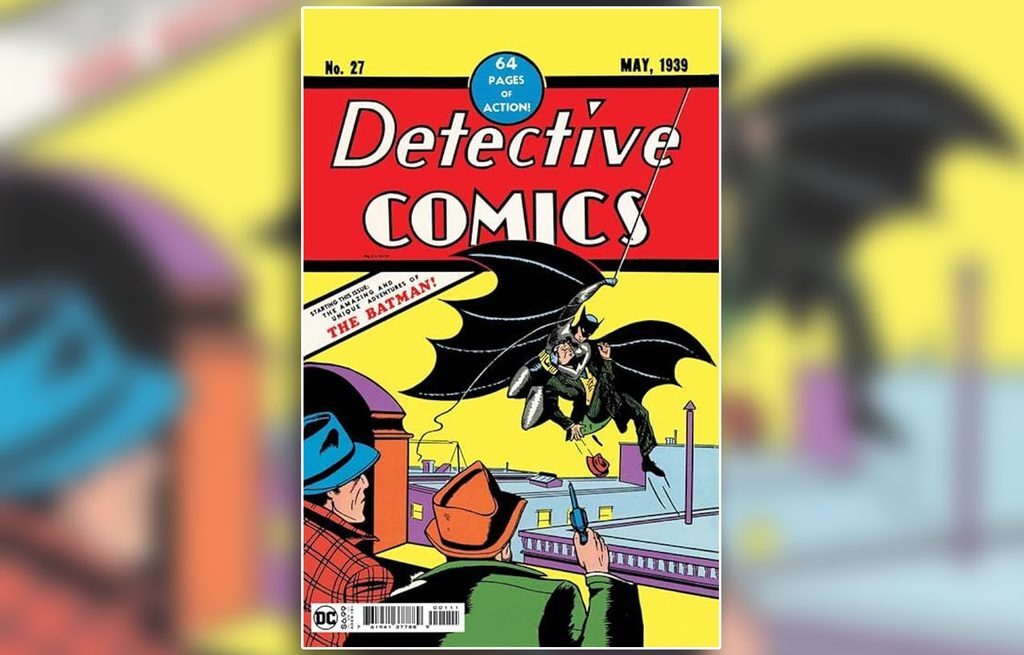
What sets Detective Comics #27 apart from nearly every other comic on the market is that its value holds up even at the lower end of the grading scale. A well-worn copy graded CGC 1.5 sold for around $216,000 at Heritage Auctions, and even the heavily read, spine-rolled copies out there have crossed the $100,000 mark. For a comic printed in 1939, that price floor is pretty extraordinary.
Think back to 1939 for a second. No one on earth knew who Batman was - no movies, no TV shows, no merchandise, nothing at all. He was a brand new character tucked into a detective anthology magazine and nothing more. That one issue has since grown into one of the most treasured printed objects in American pop culture history, which is almost hard to believe. Bob Kane and Bill Finger had no way to know that the character they put on those pages would still sell for seven figures more than 80 years later. An origin story like that is pretty rare - even for the most legendary books in the hobby. That historical weight is a big part of what makes any copy of this book feel irreplaceable.
Why a First Appearance Is Worth the Most
Across Batman's publishing history, the highest-selling comics share one trait in common - they nearly always mark a character's first appearance. Robin's debut in Detective Comics #38, the Joker's first page in Batman #1 and Catwoman's introduction in that very same issue - these are the ones that dedicated collectors are willing to go to war over and the prices they reach tell you just that.
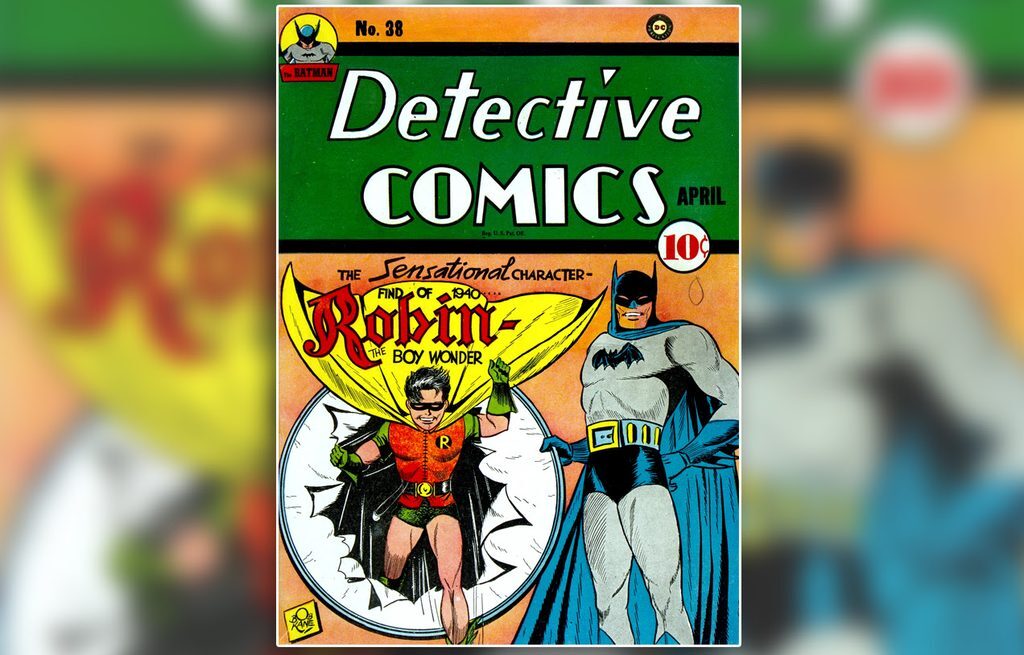
Rarity is only part of the story. A first appearance is a fixed point in history - it's the one issue where a character goes from nothing to actually existing, something that can never happen a second time. A hundredth appearance could have a better story or a more memorable cover. None of that changes the fact that it'll never carry the same weight as the first one. Collectors know this on a gut level, and the prices they're willing to pay are a pretty fair reflection of it.
Ra's al Ghul's debut in Batman #232 is a great example of this - it took decades for the character to reach mainstream audiences through film and television, and for a long time the value of that issue reflected that. Once he finally made it to the big screen, Batman #232 climbed fast and has stayed in demand ever since. That trajectory is a reminder of how a first appearance can sit under the radar for years, its value dormant until the wider world finally catches up.
Nostalgia plays a part in this. For plenty of collectors, these comics are directly connected to the version of a character that they first fell in love with. That debut issue is a way for them to hold onto something that feels original - and the fact that well-preserved copies are so hard to come by can only add to the appeal. With books from the 1930s and 40s, the pool of surviving copies gets a little smaller every year.
How a CGC Grade Affects the Price
Batman comics are a one-of-a-kind market - two copies of the exact same issue can sell for wildly different prices, and the difference usually traces back to one factor - condition. A mint copy and a beat-up version of that same issue will land in very different price territory - that's where comic grading enters the picture.
Every point on that scale carries actual dollar value, and the numbers make that pretty hard to argue with. A CGC 4.0 copy of Batman #1 sold at auction for around $57,600. A CGC 9.4 copy of that exact same book sold for over $2.2 million, and that's not a typo.
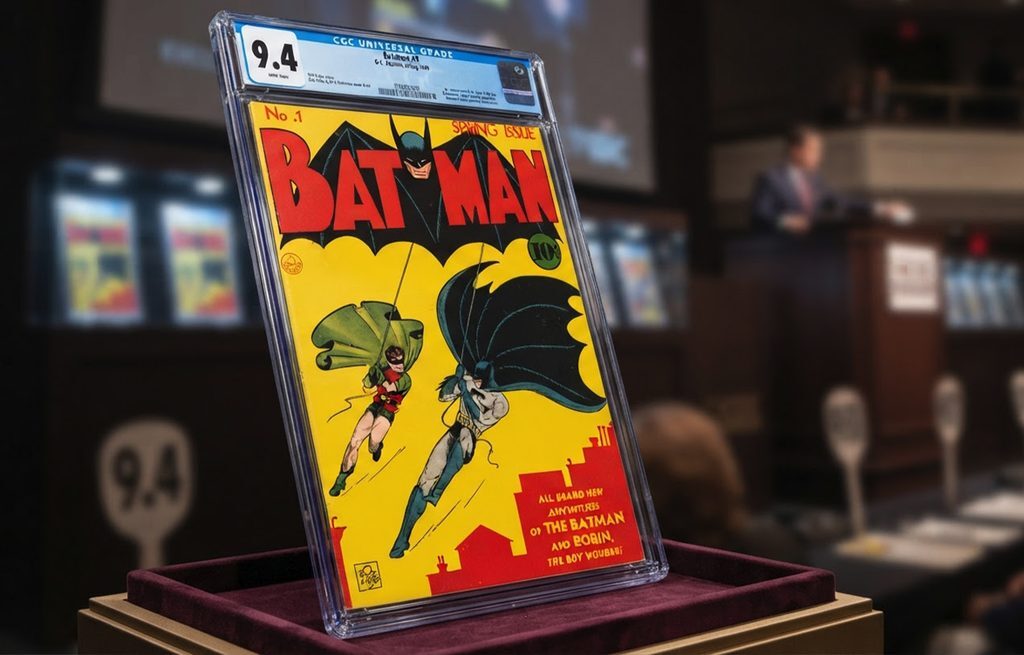
As for what graders look at, corners are usually the first place they go to - even a minor bend or a slightly blunted tip is enough to drag a grade down in a hurry. From there, the spine gets a careful look for stress lines, splits or general wear from years of use. Page color is another area to check - yellowed or brittle pages are a pretty reliable sign of age and poor storage. Creases on the cover and on interior pages matter as well, and they add up.
First-time collectors figure that two copies of the same issue are more or less interchangeable - it's almost never the case. A copy that photographs well could still come in at a 3.0 or lower once a professional gets it in hand. On a big issue, that difference in grade can mean hundreds of thousands of dollars.
Condition grading is also where newcomers run into actual trouble. Without a decent sense of what to look for, it's pretty easy to overpay for a copy that ends up at a much lower grade than you'd hoped - and at these price points, that can be an expensive mistake. It's probably the part that I stress most with anyone new to the hobby - before you spend money on a big issue, take a little time with how grading actually works. Even a modest amount of knowledge can change the outcome dramatically when the price tags get up this high.
Prices Ran Wild from 2020 to 2022
The years between 2020 and 2022 were a wild time for the Batman comic market. Golden Age prices were climbing fast, and the auction results were right there to prove it. Heritage Auctions and ComicConnect were posting record numbers on Golden Age books all throughout this period, and the hobby as a whole was pulling in a wave of attention that it hadn't seen before.
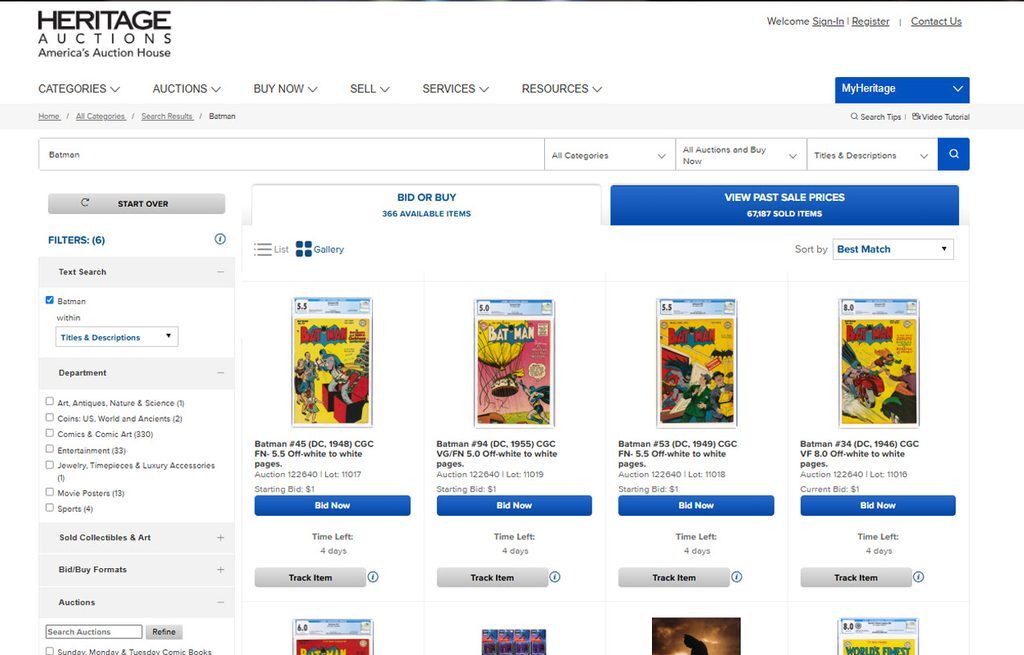
A few factors had to line up at once for this to happen. The pandemic drove a whole new wave of collectors online, and auction sites became the default place to park and spend their disposable income. Comics ended up pulling in a big share of all that money.
By late 2022 and into 2023, the energy had settled. Prices pulled back into a more stable range and the record-setting pace that had defined the previous couple of years slowed down considerably. A sharp run-up in any collectibles market is usually going to be followed by a cooldown period - it's just how these cycles play out.
Everything that drove those prices up (nostalgia, the cultural staying power and the genuine appeal of owning a part of comic history) hasn't gone anywhere. A new Batman film, a big anniversary or a single high-profile auction result could pull that collector attention right back in that direction. Markets like this run almost entirely on emotion and momentum, and it doesn't take much at all to get them moving again.
As for when the next spike will actually happen (two years from now, ten years, who knows), even the most experienced collectors won't put any money on a timeline. That unpredictability is a big part of what makes this market so interesting to watch.
The Problem With Restored and Fake Copies
If you set out to find any of these books, the condition and authenticity are going to matter far more to you than the title or the issue number. A single small flaw in either area can knock the value down dramatically.
A restored copy is one of the harder books to detect - even with a trained eye. A lot of work goes into one of these - it's the whole point. Color touch-ups are used to hide fading, the edges get trimmed to clean up the book's outline, and a weak or damaged spine will usually get glued back together. These techniques are extremely common. Any one of them can be almost invisible if you don't know what to look for (it's what makes restoration such a problem) - it's not necessarily obvious, even up close.
An unrestored copy will usually grade higher than a "fixed up" one, and the reason for that is about trust. Collectors want to know that what they're holding is as it came off the press - flaws and all. A book with a small tear that's never been touched will grade much better than one that looks flawless but has had some restoration work done to it. Authenticity is what drives this whole hobby. The market has no interest in a perfect-looking copy if there's any question about how it got that way.
Professional grading services like CGC were built specifically to take that worry off the table. Every book gets examined, authenticated and then sealed in a tamper-proof case with a grade that the whole market can trust. That grade also travels with the book, so anyone who buys or sells it knows what they're getting.
The Right Comic at the Right Time
The numbers behind these books are staggering, and it all traces back to one pretty basic idea - the right comic, in the right condition, with the right history behind it, is something the market tends to reward almost every time. First appearances matter because they're permanent. Grade matters because condition is everything in this hobby. And authenticity matters because without it, none of the other pieces hold up - not even a little.
If you're new to this corner of the hobby, the two best moves you can make are to get familiar with the grading scale and to start watching auction results closely. You don't need a million-dollar budget to develop an eye for this hobby. Auction results for high-grade copies, tracked over time, will give you a better read on this market than almost anything else will.
The 2020 to 2022 window proved just how fast collector sentiment can move prices, and none of what fueled that surge has gone away. A big cultural event, a new film, a milestone anniversary - any of these can pull the right book back into the conversation almost overnight. The next big run might come next year, or it might take a decade. But books that made history once usually hold onto that weight for a very long time.
If this piece got you excited about vintage comics, then Quality Comix is a great place to channel that interest. We've spent over 25 years with our hands deep in the vintage books - whether you want to build a collection from scratch, sell something that you already own, or just browse and see what's out there, we can help. Give the new arrivals a look to see what just came in, check out the Deal of the Week for something worth grabbing or download the free e-book to learn more. Every great collection starts with a single issue worth having.